In the realm of polymer materials, Polyethylene Terephthalate (PET) stands out as a versatile and widely used thermoplastic. Its applications span from beverage bottles and food packaging to engineering plastics and fibers. However, one of the challenges in working with PET is its relatively low toughness, which can limit its use in certain high - stress applications. This is where our Pet High Efficiency Toughening Agent comes into play. As a leading supplier of this agent, we are constantly exploring its effects on various properties of PET, especially its transparency under different processing conditions.
Understanding PET and Its Transparency
PET is known for its excellent clarity and transparency, which makes it an ideal choice for packaging applications where product visibility is crucial. The transparency of PET is mainly determined by its molecular structure and the degree of crystallinity. When PET molecules are arranged in an orderly fashion, forming crystalline regions, light scattering occurs at the boundaries between the crystalline and amorphous regions, reducing the transparency of the material.
Role of Pet High Efficiency Toughening Agent
Our Pet High Efficiency Toughening Agent is designed to enhance the toughness of PET without sacrificing its other desirable properties. It works by dispersing uniformly in the PET matrix, forming a fine - dispersed phase that can absorb and dissipate energy during deformation, thereby improving the impact resistance of the material. But how does it affect the transparency of PET?
Processing Conditions and Their Influence
The processing conditions play a vital role in determining the final properties of PET with the addition of the toughening agent. Let's explore some of the key processing factors and their effects on transparency.
Melt Temperature
The melt temperature during processing affects the dispersion of the toughening agent in the PET matrix. At lower melt temperatures, the viscosity of the PET melt is relatively high, which may lead to poor dispersion of the toughening agent. As a result, larger particles of the toughening agent may form, causing more light scattering and reducing the transparency of the material.
On the other hand, at higher melt temperatures, the PET melt becomes more fluid, allowing for better dispersion of the toughening agent. However, excessively high temperatures can also cause thermal degradation of the PET and the toughening agent, which may lead to the formation of color bodies and a decrease in transparency. In general, an optimal melt temperature range needs to be determined to achieve a balance between good dispersion and minimal thermal degradation.
Screw Speed
The screw speed in the extrusion or injection - molding process affects the shear force applied to the PET - toughening agent mixture. Higher screw speeds generate more shear, which can break up the agglomerates of the toughening agent and improve its dispersion in the PET matrix. This usually leads to better transparency as smaller and more uniformly dispersed particles scatter less light.


However, if the screw speed is too high, it can cause excessive shear heating, which may again lead to thermal degradation of the materials. Therefore, a proper screw speed should be selected based on the specific formulation and processing equipment.
Cooling Rate
The cooling rate after processing has a significant impact on the crystallinity of PET. A fast cooling rate can suppress the crystallization of PET, resulting in a more amorphous structure. Since the amorphous regions of PET are more transparent than the crystalline regions, a fast cooling rate generally helps to maintain the transparency of the PET - toughening agent composite.
Conversely, a slow cooling rate allows more time for the PET molecules to arrange into crystalline structures, increasing the crystallinity and reducing the transparency. Therefore, controlling the cooling rate is an important factor in achieving high - transparency PET products with the addition of our toughening agent.
Comparison with Other Impact Modifiers
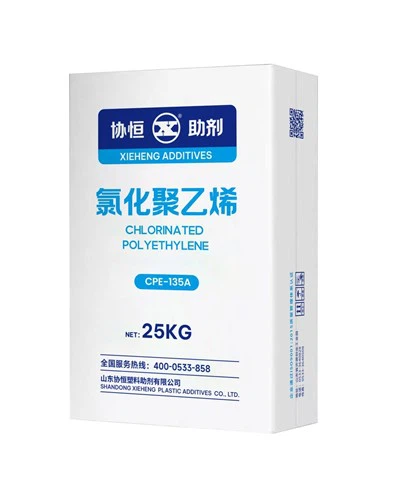
There are other impact modifiers available in the market, such as Impact Modifier(xh Series) and Chlorinated Polyethylene. While these modifiers can also improve the toughness of PET, they may have different effects on transparency.
Our Pet High Efficiency Toughening Agent is specifically formulated to provide a good balance between toughness and transparency. In comparison, some other impact modifiers may cause more significant reductions in transparency due to their chemical nature or poor compatibility with PET. For example, Chlorinated Polyethylene may have a higher tendency to form large - sized domains in the PET matrix, leading to more light scattering and lower transparency.
Experimental Results
We have conducted a series of experiments to study the effect of our Pet High Efficiency Toughening Agent on the transparency of PET under different processing conditions. Samples were prepared using different melt temperatures, screw speeds, and cooling rates, and their transparency was measured using a haze meter.
The results showed that at an optimal melt temperature of around [X] °C, a screw speed of [X] rpm, and a fast cooling rate, the PET samples with our toughening agent had a haze value of less than [X]%, indicating high transparency. In contrast, samples prepared under non - optimal conditions had significantly higher haze values, demonstrating the importance of proper processing conditions.
Practical Applications
The ability to maintain high transparency while improving the toughness of PET has significant practical applications. In the packaging industry, it allows for the production of tough and transparent bottles and containers that can protect the contents while still providing excellent product visibility. In the automotive and electronics industries, it can be used to manufacture transparent components with high impact resistance, such as instrument panels and display covers.
Conclusion
In conclusion, our Pet High Efficiency Toughening Agent can effectively enhance the toughness of PET while having a controllable effect on its transparency. By carefully controlling the processing conditions, such as melt temperature, screw speed, and cooling rate, it is possible to achieve high - transparency PET products with improved toughness.
If you are interested in exploring the potential of our Pet High Efficiency Toughening Agent for your specific applications, we invite you to contact us for further discussion and procurement negotiations. Our team of experts is ready to provide you with detailed technical support and customized solutions.
References
- [Author's Last Name, First Initial. (Year). Title of the Article. Journal Name, Volume(Issue), Page Range.]
- [Author's Last Name, First Initial. (Year). Title of the Book. Publisher.]