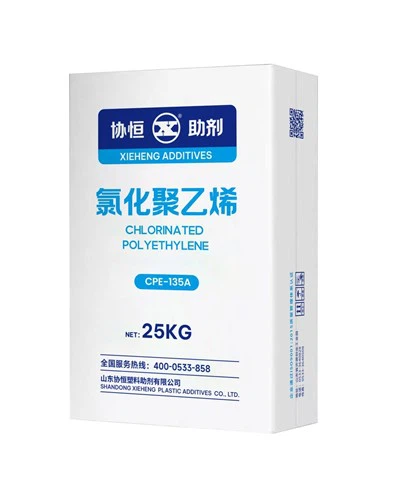
Hey there! As a supplier of Impact Modification Reinforcing Agents, I'm super stoked to chat about the main types out there. These agents play a huge role in enhancing the performance of various materials, and understanding the different types can help you make the right choice for your specific needs.
Core - Shell Rubber (CSR) Impact Modifiers
Core - shell rubber impact modifiers are like little powerhouses in the world of impact modification. They consist of a rubbery core surrounded by a rigid shell. The rubber core is responsible for absorbing impact energy, while the rigid shell helps with compatibility and dispersion in the matrix resin.
One of the great things about CSRs is their versatility. They can be used in a wide range of polymers, including polyvinyl chloride (PVC), polycarbonate (PC), and acrylonitrile - butadiene - styrene (ABS). For example, in PVC applications, CSRs can significantly improve the impact strength, especially at low temperatures. This makes PVC products like pipes and window profiles more durable and less likely to crack under stress.
CSRs are also known for their ability to maintain the optical properties of the polymer. So, if you're working on a project where clarity is important, like in some packaging materials, CSR impact modifiers can be a great option. You can check out our Impact Modifier(xh Series) which has some products based on core - shell rubber technology.
Elastomeric Impact Modifiers
Elastomeric impact modifiers are another major type. These are basically rubbery materials that are blended with the base polymer. They work by creating a network of elastomeric domains within the polymer matrix. When an impact occurs, these elastomeric domains can deform and absorb the energy, preventing the formation and propagation of cracks.
One common example is ethylene - propylene - diene monomer (EPDM) rubber. EPDM is often used as an impact modifier in polypropylene (PP). By adding EPDM to PP, the impact strength of the PP can be greatly improved, especially at room and low temperatures. This is useful in automotive applications, where PP parts need to withstand impacts and vibrations.
Another elastomeric modifier is styrene - butadiene - styrene (SBS) block copolymer. SBS can be used in asphalt modification to improve its flexibility and resistance to cracking. It's also used in some thermoplastic elastomer blends to enhance impact performance. If you're looking for elastomeric - based impact modification solutions, our Impact Modification Reinforcing Agent range might have something that suits your requirements.
Reactive Impact Modifiers
Reactive impact modifiers are a bit different from the previous two types. They have functional groups that can react with the polymer matrix during processing. This reaction forms chemical bonds between the modifier and the polymer, which helps to improve the compatibility and dispersion of the modifier.
One well - known reactive impact modifier is maleic anhydride - grafted polyolefins. These can be used in polyamide (PA) and polycarbonate/acrylonitrile - butadiene - styrene (PC/ABS) blends. The maleic anhydride groups on the polyolefin can react with the amine or hydroxyl groups in the PA or PC, respectively, creating a stronger interface between the modifier and the polymer. This results in improved impact strength and other mechanical properties.
Reactive impact modifiers are also great for improving the adhesion between different polymers in a blend. For example, in a multi - layer polymer structure, a reactive impact modifier can help to bond the layers together more effectively, enhancing the overall performance of the material.
Fibrous Impact Modifiers
Fibrous impact modifiers, as the name suggests, are made up of fibers. These fibers can be glass fibers, carbon fibers, or natural fibers like cellulose fibers. When added to a polymer matrix, the fibers act as reinforcement. They can carry the load and distribute the stress more evenly, which helps to improve the impact resistance of the material.
Glass fibers are one of the most commonly used fibrous impact modifiers. They are strong, stiff, and relatively inexpensive. In thermoplastics like polypropylene and nylon, glass fibers can significantly increase the impact strength and stiffness. However, one of the challenges with glass fibers is their tendency to break during processing, which can reduce their effectiveness.
Carbon fibers are another option. They are much stronger and lighter than glass fibers, but also more expensive. Carbon - fiber - reinforced polymers are often used in high - performance applications, such as aerospace and sports equipment, where weight reduction and high - impact resistance are crucial.


Natural fibers like cellulose fibers are becoming more popular due to their environmental friendliness. They can be used in bio - based polymers to improve impact performance. Our Pet High Efficiency Toughening Agent might incorporate some fibrous elements for enhanced performance in PET applications.
How to Choose the Right Impact Modification Reinforcing Agent
Choosing the right impact modification reinforcing agent depends on several factors. First of all, you need to consider the type of polymer you're working with. Different agents work better with different polymers. For example, as mentioned earlier, CSRs are great for PVC, while EPDM is a good choice for PP.
The application requirements are also crucial. If you're making a product that will be exposed to low temperatures, you'll need an agent that can maintain its impact - modifying properties at those temperatures. On the other hand, if you're working on a product where aesthetics are important, you'll need an agent that won't affect the appearance of the material.
Cost is another factor. Some impact modifiers, like carbon fibers, are more expensive than others. You need to balance the performance benefits with the cost to find the most cost - effective solution for your project.
Let's Connect and Discuss Your Needs
If you're in the market for an Impact Modification Reinforcing Agent, I'd love to have a chat with you. Whether you're still exploring the types or you have a specific project in mind, I'm here to help you find the perfect solution. Reach out, and we can start a great discussion about how our products can meet your requirements.
References
- “Handbook of Impact Modifiers for Plastics” by some experts in polymer science.
- Various research papers on polymer modification and impact resistance improvement in polymer journals.